
Epoxy Floor Coatings
The most popular next step after stripping - a durable epoxy finish that bonds to a properly prepared slab and holds up for years.
Learn More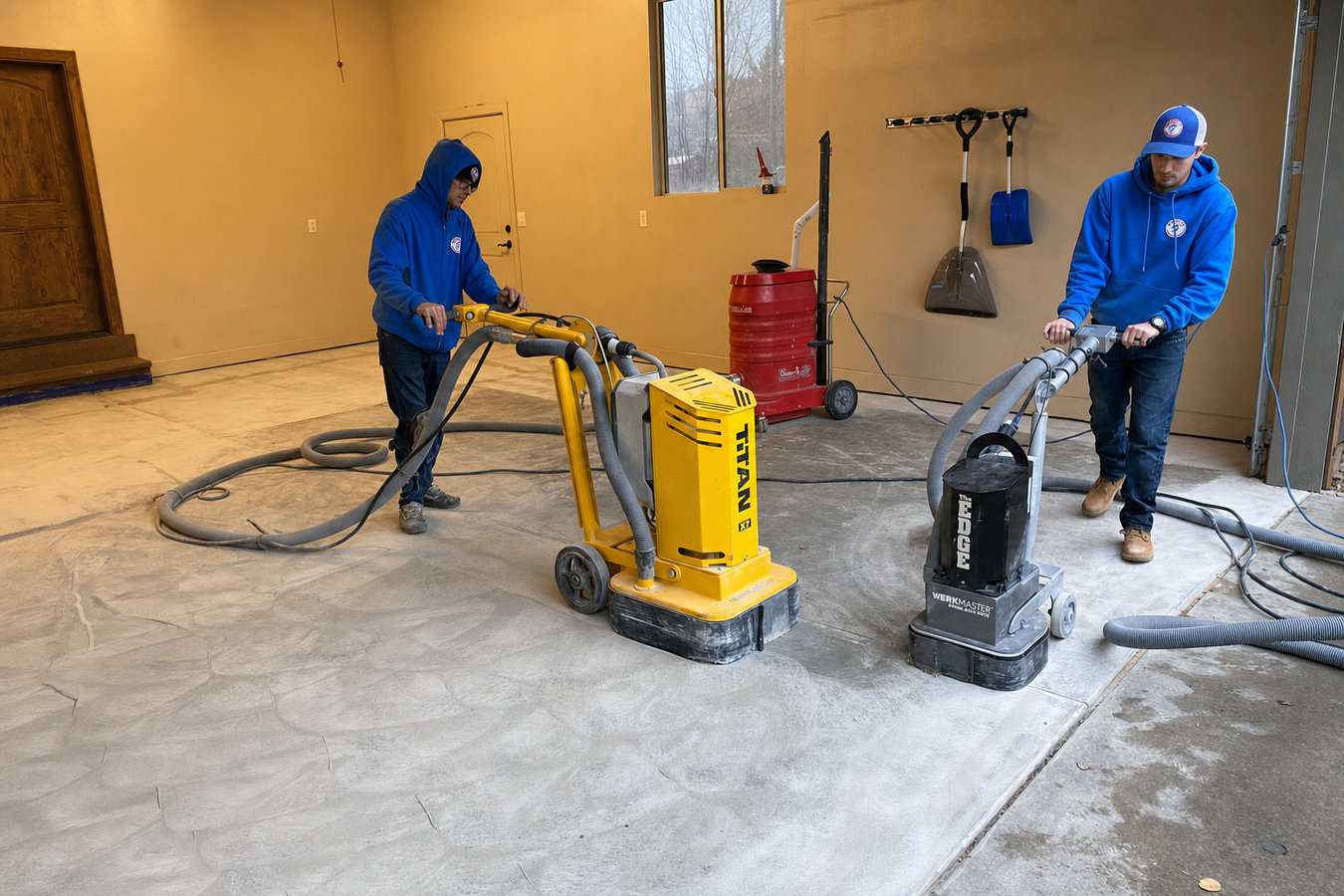
Old coatings, peeling paint, and stubborn adhesive prevent new floors from bonding correctly. We grind your slab back to clean, bare concrete so your next finish actually holds.
Concrete floor stripping in Salinas is the process of removing an existing coating, sealant, or adhesive layer from a concrete slab - not the concrete itself - using grinding or shot-blasting equipment, with most standard garages and basements completed in one to two days, leaving a clean surface ready for whatever comes next.
Homeowners in Salinas most often call us when a new coating or floor finish keeps failing - bubbling up, peeling in patches, or not bonding the way the installer promised. Almost always, the problem is not the new product. It is whatever is still on the slab underneath it. A new coating applied over old adhesive residue, peeling sealant, or concrete contaminated by oil will fail just as fast as the last one. Stripping removes that failed layer completely so the next application has a clean, porous surface to bond to. For jobs where the slab also needs to be leveled or repaired before a new finish goes on, we coordinate this work directly with our concrete grinding and surface preparation service.
Think of floor stripping the way you think about sanding old paint off wood before repainting - the goal is a solid, clean starting point. Skip it and the new finish inherits all the problems of the old one.
If you can see areas where the surface is lifting away from the concrete underneath - especially near garage doors or entry points - the coating has lost its bond and is failing. In Salinas, this often happens faster than expected because coastal fog moisture works its way under coatings that were applied to a slab that was not properly dried. Once peeling starts, it spreads, and painting or patching over it will not hold.
That white powder is efflorescence - mineral salt pushed up through the concrete as moisture moves through the slab. It is especially common in Salinas because of the area's humidity and the way moisture cycles through ground-floor slabs. It signals that moisture is actively moving through your concrete, and any coating applied over it without addressing the underlying surface will fail quickly.
Old adhesive from removed carpet, vinyl tile, or linoleum often leaves a residue that feels tacky and looks patchy. This residue has to be fully removed before any new flooring or coating can be installed - it will prevent proper bonding no matter what product goes on top. Mopping it does not help; grinding is the only reliable solution.
If a tile setter, epoxy applicator, or flooring installer has told you the existing surface needs to be stripped before they can start, that is a professional assessment you should take seriously. Skipping this step to save money almost always results in the new floor failing within a year or two - and the cost of redoing it is far higher than doing the prep correctly the first time.
We strip concrete floors in garages, basements, commercial spaces, and interior rooms throughout the Salinas area, using vacuum-equipped diamond grinders and shot-blasting equipment that capture dust at the source. Before we start any job, we ask about the age of your home - because Salinas has a significant share of housing built before 1980, and old adhesives from that era may contain materials that require testing and special handling under California law. We do not skip this conversation to get a job started faster. For jobs that also involve full concrete surface preparation and profile opening before a new coating, we tie stripping directly into our concrete grinding and surface preparation service so both steps are handled as one continuous process.
Once stripping is complete, we test the slab for moisture before any next step is recommended - because Salinas's coastal humidity means ground-floor slabs often hold more moisture than slabs in drier inland cities, and applying an epoxy floor coating or any other finish to a damp slab is one of the most common reasons new floors fail in this area. We bag and haul all debris as part of the job, confirm that any materials requiring special disposal under California regulations are handled correctly, and walk you through the finished surface before we pack up.
Best for garages where oil, adhesive residue, or a failed coating needs to come off completely before a new epoxy or polyaspartic floor can be applied.
Suited for interior slabs where old paint, tile adhesive, or vinyl floor backing needs to be fully removed before tile, hardwood, or a new coating goes down.
For homeowners whose installer or coating contractor has specified that the slab needs to be stripped and profiled before any new flooring system can be installed.
A large portion of Salinas's housing stock - including older neighborhoods in Alisal and areas near downtown - was built between the 1950s and 1970s. Homes of that era often have concrete floors with multiple generations of coatings layered on top of each other: original paint, then a sealant, then adhesive residue from old vinyl tile that was removed years ago. More layers mean more grinding passes, more time, and potentially higher cost. If your home was built before 1980, it is worth asking your contractor upfront about the possibility of multiple layers. Homeowners in Seaside and Marina often have similar housing ages and face the same multi-layer stripping needs.
Salinas's marine-influenced climate also creates persistent moisture in slabs. Ground-floor concrete in this area holds more moisture than slabs in drier inland cities, which is exactly why coatings applied here without proper surface preparation fail faster than manufacturers predict. The California Division of Occupational Safety and Health enforces strict dust-control requirements for concrete grinding work in this state, which means licensed contractors operating in Salinas are required to use vacuum-equipped equipment - not optional best practice, but a legal obligation. Agricultural grit and fine soil tracked in from the surrounding Salinas Valley fields also grinds into floor coatings over time, accelerating wear near entryways and garage doors, which is why floors in this area sometimes need stripping sooner than homeowners in other California cities would expect. The EPA's guidance on asbestos is worth reviewing if your home predates 1980 - older adhesives require careful handling before any grinding starts.
We ask about the size of the space, what is currently on the floor, and how old your home is before we even schedule a visit. Those answers help us show up with the right equipment and give you a more accurate quote. Most estimates for residential jobs are free and can be scheduled within a few days.
We walk the space, look at the existing surface, and check for things you might not notice - soft spots in the coating, moisture signs, or the possibility of old adhesive that needs testing before grinding begins. You leave the estimate with a written quote that breaks down exactly what is included, including debris removal.
The crew arrives with vacuum-equipped grinding equipment and works systematically across the floor. The machines are loud and the work is aggressive, but dust is captured at the source. We recommend turning off your HVAC during the job. Depending on the space and how many layers need to come off, this phase takes a few hours to a full day.
When stripping is done, we walk you through the finished surface - uniform color and texture, no shiny patches or sticky spots. All debris is bagged and hauled. Before we leave, we discuss drying time, which can run 24 to 72 hours in Salinas's coastal humidity, and what to do next with the clean slab.
We respond within one business day - free estimates, written quotes, no obligation.
(831) 243-7185Salinas has a large share of homes built before 1980, and old floor adhesives from that era may require testing before grinding begins. We ask about your home's age at the first call - not after we have already started the job. That conversation determines whether testing is needed and ensures there are no surprises partway through the work.
California requires licensed concrete grinding contractors to use dust-suppression equipment. We use vacuum-attached grinders on every residential job, which keeps the dust in the work area rather than drifting through your house. If a contractor shows up to quote your job without mentioning dust control, ask specifically how they handle it before you sign anything.
Salinas's coastal climate means ground-floor slabs hold more moisture than slabs in drier inland cities. We test the slab for moisture after stripping is complete and before recommending anything new goes down. This single step is the most common reason floor coatings in this area succeed or fail - and we will not skip it.
All ground-up coating, adhesive residue, and debris is bagged and hauled as part of the job. In California, some old materials - particularly adhesives from pre-1980 homes - require special disposal handling under state regulations. We know the rules and handle this correctly. You are not left managing material removal or wondering about disposal liability.
Floor stripping is the step that determines whether everything that comes after it holds up. We have done enough of this work in Salinas to know the local conditions - the moisture, the older housing stock, the agricultural environment - and we bring that knowledge to every estimate and every job.
The most popular next step after stripping - a durable epoxy finish that bonds to a properly prepared slab and holds up for years.
Learn MoreWhen stripping needs to be paired with full profile opening and surface repair before a new coating system, grinding and surface prep rounds out the job.
Learn MoreWe are booking residential jobs now - get your floor prepped and ready before your next project phase begins.